
SoftBank moves to buy control of 1X — the home-robot frontrunner, at a marked-down $6 billion.
August 27, 2026 — SoftBank is in talks to take a majority stake in 1X Technologies, maker of the NEO home humanoid, at a roughly $6 billion valuation — below the $10 billion 1X chased last year, and a bet placed before a single NEO has reached a paying customer.
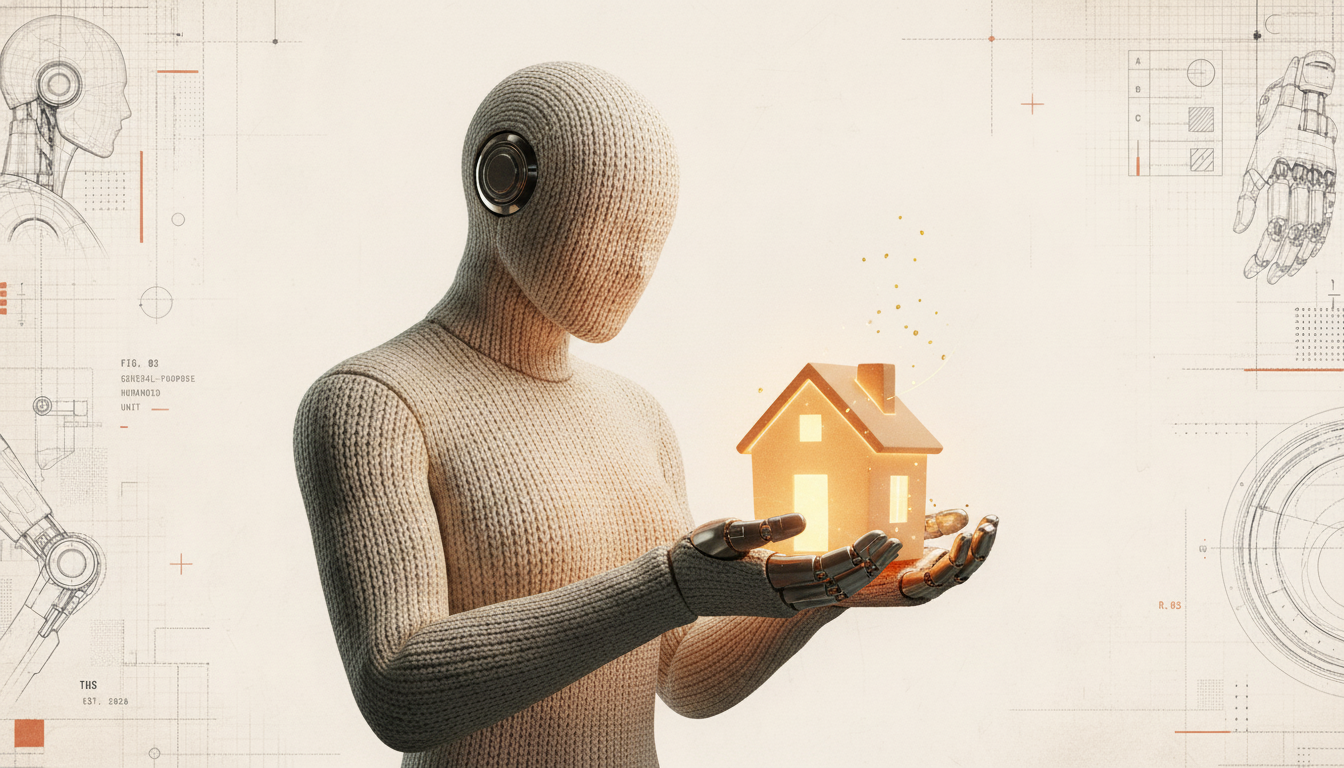
SoftBank is in talks to acquire a majority stake in 1X Technologies, the OpenAI-backed maker of the NEO home humanoid, in a deal that would value the Norwegian-American startup at about $6 billion, according to a report from The Information that circulated on August 27; Reuters summarized it the same day and said it could not independently confirm the terms. Neither SoftBank nor 1X commented. If it closes, the deal would hand SoftBank founder Masayoshi Son control of one of the West's most prominent bipedal platforms. The $6 billion figure sits below the $10 billion valuation 1X was reported to be seeking last September, when it aimed to raise up to $1 billion and reportedly secured less than half of that — though the comparison deserves a caveat: a controlling purchase is priced differently from a minority venture round, and the earlier $10 billion was an ask that never closed. Against 1X's last widely reported institutional mark, $6 billion is still a large step up.
1X is an unusually watched company for one that has yet to ship a product to the public. Founded in Moss, Norway in 2014 as Halodi Robotics and rebranded in 2023, it moved from building safe actuators toward androids for the home under CEO Bernt Børnich; the OpenAI Startup Fund led a $23.5 million round in 2023, and The Information reports OpenAI itself weighed buying 1X outright last year before those talks fizzled. Its consumer robot, NEO, is a knit-covered, deliberately compliant bipedal machine that runs 1X's Redwood AI and leans on a scheduled human teleoperator — an 'Expert Mode' — for tasks it cannot yet do alone. NEO can be reserved at $20,000 outright or $499 a month against a $200 refundable deposit, and when preorders opened last October the company says demand — more than 10,000 orders — was strong enough to sell out its roughly 10,000-unit first year of production within days. 1X has been scaling a 58,000-square-foot California factory toward 10,000 NEO units a year, with a stated target of 100,000 by the end of 2027.
For SoftBank, 1X would complete a physical-AI shopping spree. Over the past year Son's group agreed to buy ABB's industrial robotics division for about $5.4 billion, anchored a $1.4 billion round in the foundation-model startup Skild AI, and put $200 million into autonomous-excavator maker Gravis Robotics — all after selling its remaining Boston Dynamics stake to Hyundai for roughly $325 million. The organizing thesis is a split between 'brains and bodies,' with 1X supplying the one category ABB's factory arms cannot reach: a compliant machine meant to work safely inside an ordinary home. But the tell in the deal is the gap it is meant to close. Despite an order book north of 10,000, 1X has not publicly confirmed a single customer delivery, months into the year it promised its first shipments. What SoftBank's money would buy is exactly what stands between the reservations and a working product — production lines, supply-chain absorption and the service infrastructure to support a robot living in a stranger's house.
For a home buyer, the deal changes the backer, not the product. Nothing about a SoftBank investment makes NEO more capable or closer to your door: it is still a $200 deposit against a $20,000 machine that no customer has been confirmed to have received and that relies on a remote human for hard tasks. What the transaction does tell you is that the capital required to make a household humanoid real has outgrown what a startup can raise alone — and that a $6 billion price, marked down from a $10 billion ask, is a sign investor enthusiasm for consumer-robot startups has cooled even as a strategic buyer pays up for control. Treat 2026 'home robot' timelines with that in mind, and judge NEO on the evidence that matters: a list of tasks it completes autonomously in a real home with no operator in the loop, and confirmed deliveries to buyers free to describe them. Two governance questions are also worth tracking before depending on the machine for years — whether OpenAI is selling its position, and whether founder Børnich keeps operational control once Tokyo signs the check.
- Humanoids DailyAugust 27, 2026SoftBank in Talks for Majority Stake in 1X at $6 Billion — Below the $10 Billion It Sought Last Year →
- Tech Funding NewsAugust 28, 2026SoftBank in talks to buy majority stake in 1X at $6B valuation →
- The InformationAugust 27, 2026SoftBank in Talks to Buy Majority Stake in Humanoid Maker 1X at $6 Billion Valuation →
External links open in a new tab. TheHumanoidStore is not affiliated with any of the publications or companies cited above.