
FieldAI raises $700M at a $10B valuation for a 'universal robot brain' — the bet that intelligence, not hardware, is the humanoid prize.
October 2, 2026 — Robot-software startup FieldAI reportedly raised about $700 million at a roughly $10 billion valuation, more than quadrupling its worth in a year, as investors pour money into a cross-embodiment 'brain' meant to run humanoids, robot dogs and drones alike — a reminder that in 2026 the AI layer is being priced above the machines it controls.
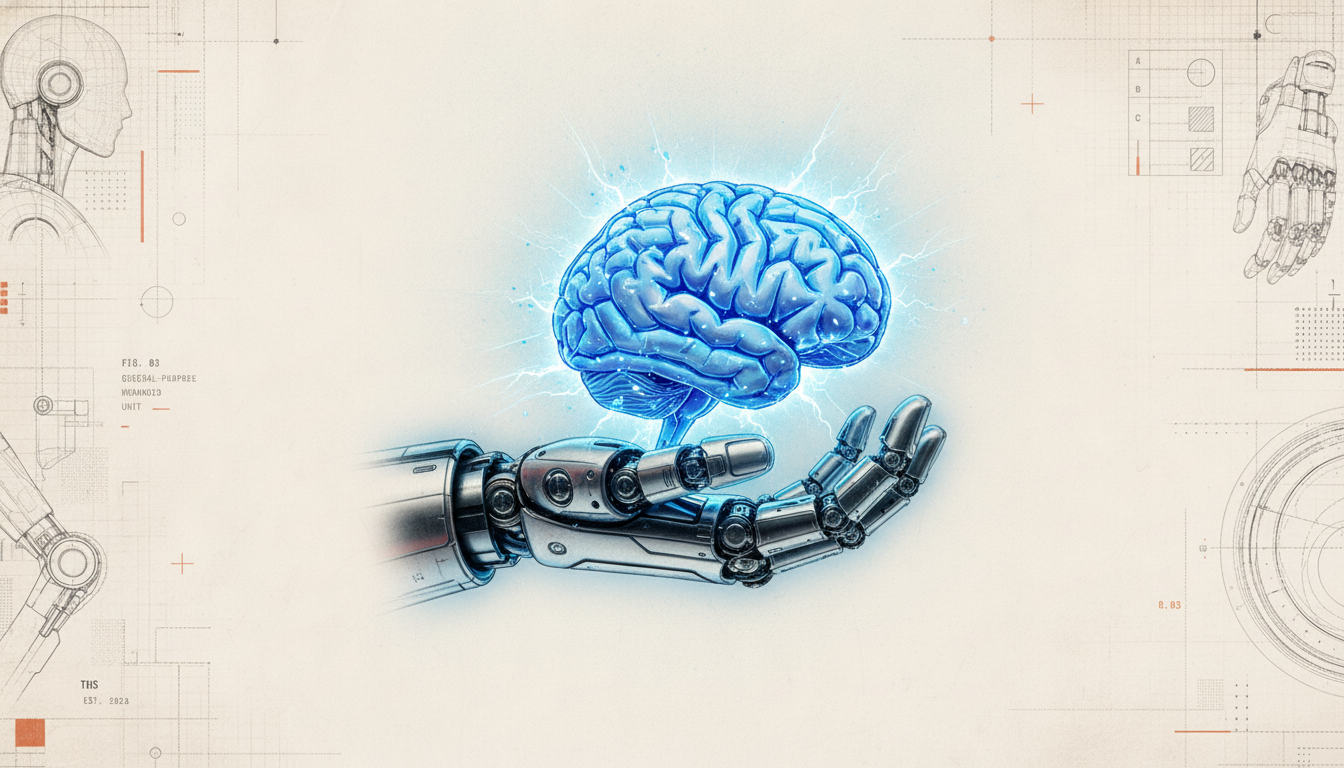
FieldAI, a robotics-software company based in Irvine, California, and the Bay Area, has reportedly raised about $700 million at a roughly $10 billion valuation, according to a Business Insider report citing a person familiar with the deal. That is more than quadruple the roughly $2 billion the company was worth a year ago, after it raised over $400 million from backers including Jeff Bezos' family office, Laurene Powell Jobs' Emerson Collective and Khosla Ventures; the lead investor on the new round was not disclosed, though Nvidia's venture arm NVentures and Intel Capital are among its supporters. Founded in 2023 by chief executive Ali Agha, FieldAI is building what it calls a 'universal general-purpose brain' — software it designs to run humanoids, quadruped robot dogs, drones and industrial rovers without building any of that hardware itself.
What separates FieldAI's pitch from most foundation-model labs is a revenue line. The company says it has passed $135 million in revenue and signed customer contracts, adding at least $35 million since June, across more than 30 customers in construction, data centers, defense, mining, energy and logistics, and it recently signed a collaboration with equipment maker Caterpillar. The $10 billion tag places FieldAI alongside the two other best-funded startups chasing a hardware-agnostic robot brain — Physical Intelligence, valued around $11 billion, and Skild AI, valued above $14 billion. The shared thesis is that a general intelligence layer that transfers across machines could ultimately be worth more than any single robot design, because a buyer would not need to develop a separate AI system for every type of hardware, environment and task.
The valuation is a bet, not a result. Making one brain work reliably as the environment, the task and the physical body all change is precisely the problem that has tripped robotics companies for decades — far harder than training a machine to nail a single task in a controlled cell. A September report from Citrini Research, based on meetings with Bay Area robotics labs, engineers and investors, found that most humanoid robots remain stuck in development, training or teleoperated demonstrations, with real-world deployments closer to pilots than clear return-on-investment cases; basic locomotion is effectively solved, but complex dexterity and broad generalization are not. And a $10 billion price sits well ahead of a roughly $135 million revenue base. FieldAI did not comment on the round.
For a buyer, FieldAI is not something you purchase — it sells no robot — but the round reframes how to think about buying one. The capital and the leadership moves of 2026 keep converging on the same idea that surfaced elsewhere this week, in Astribot's bundled Lumo model and in Feather's 'bring your own brain' pitch: the body is commoditizing, and the brain is where the value, and the lock-in, increasingly live. The practical question for any humanoid purchase is no longer only payload and price but whose intelligence runs the machine, whether that intelligence can be upgraded or swapped as models improve, and whether it has been proven on dated, paying deployments rather than demos. A cross-embodiment brain like FieldAI's, if it delivers, would let operators choose hardware and bring the autonomy — the opposite of a sealed, single-vendor robot. Until that generalization is proven in production, though, treat a $10 billion brain the way you would a $29,600 robot: ask to see it do real work, on your floor, for longer than a demo.
- DealroomOctober 3, 2026FieldAI raises $700M at $10B valuation for its robot brain →
- BenzingaOctober 3, 2026FieldAI Raises $700 Million At $10 Billion Valuation →
- AI WeeklyOctober 3, 2026FieldAI Lands $700M at $10B Valuation for Robot Brains →
External links open in a new tab. TheHumanoidStore is not affiliated with any of the publications or companies cited above.