
Astribot brings an $18,000 humanoid to the US — the most aggressive price yet put in front of American developers, if the FCC lets it ship.
October 2, 2026 — Shenzhen's Astribot made the North American debut of its cable-driven T1 humanoid at the IROS robotics conference in Pittsburgh with US pricing from $18,000 and 'immediate delivery,' undercutting Western machines by roughly an order of magnitude — though July's FCC ban on new Chinese robots makes how it actually reaches US buyers the open question.
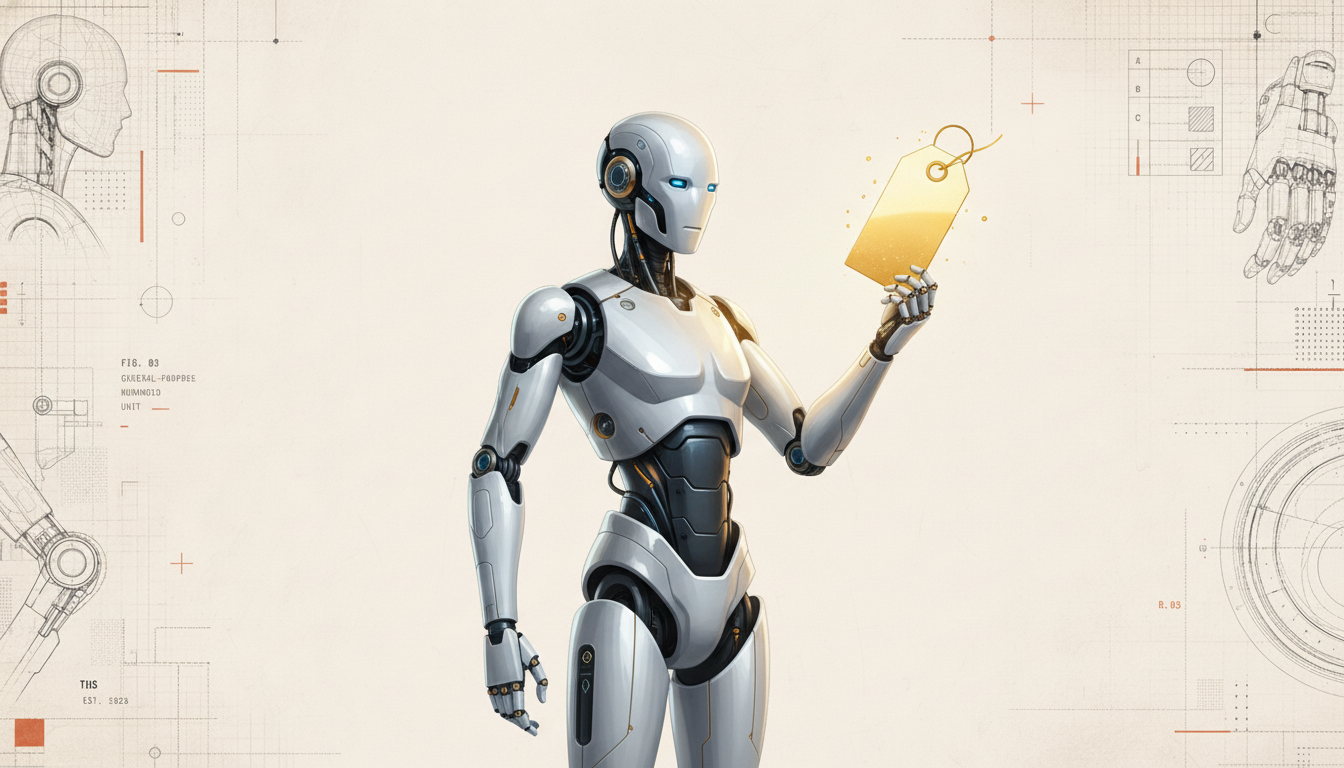
On the week of September 27, Astribot brought its T1 humanoid to North America for the first time at IROS 2026, the field's flagship research conference, held through October 1 at the David L. Lawrence Convention Center in Pittsburgh. The headline was the price: US pricing starts at $18,000, the company says orders are open now with immediate delivery, and that figure undercuts the list territory of Western humanoids by close to an order of magnitude. Astribot — formally Stardust Intelligence, a Shenzhen company founded in 2022 by Lai Jie, a veteran of Tencent's Robotics X lab and Baidu, and backed by investors including Ant Group and Matrix Partners China — first earned attention when manipulation videos of its flagship S1 looked almost too fluid to be real. The T1 is the cheaper second act, which launched in China from about $13,000 in May 2026 and is now being pitched directly at US researchers and developers.
What the money buys is a developer platform, not a bare chassis. Astribot frames the T1 as a three-layer 'Design for AI' stack: its Lumo-2 foundation model, which the company describes as a latent world-action model; an embodied operating system, Astribot OS, that gives developers SDK and API access to joint control, Cartesian motion and whole-body coordination, plus VR-based teleoperation and a natural-language interface meant to generate a working app from a one-line request; and a cable-driven body that keeps motors close to the torso and routes power through tendon-like cables for smoother, more compliant motion. The robot stands about 1.55 meters, weighs roughly 66 kilograms, has 23 degrees of freedom excluding its hands, carries up to five kilograms of payload per arm, and supports automatic charging and quick battery swaps with modular end effectors, compute and sensors. At a company hackathon that wrapped September 21 in Beijing, Astribot says 15 teams built more than ten working applications on the T1 in 36 hours; running Lumo-2, it has demonstrated autonomously tidying loose objects into a backpack.
The caveats start with that demo. 'Up to' and 'from' do a lot of work here — the T1 does not learn in real time on your floor; Astribot curates data centrally, retrains Lumo-2 and pushes updates over the air, and broader household skills, it concedes, 'depend on further training.' The cable-driven body is fast and compliant but modest in payload, and at 1.55 meters it is a compact manipulator, not a heavy-industrial biped. The larger asterisk is regulatory: July's FCC ban added humanoid robots to the US government's Covered List, barring new-model equipment authorizations for covered Chinese machines, which makes a brand-new Chinese humanoid advertising 'immediate delivery' to US customers a genuine puzzle. Astribot has not explained how the T1 squares with that ban — whether it ships under a research-and-developer carve-out, whether units are already authorized, or whether the marketing is simply ahead of the compliance reality.
For a buyer, the T1 is the most aggressive number anyone has put in front of US developers: an order of magnitude under Figure, 1X or Agility list territory, with an open SDK and bundled AI that make it a plausible foundation for labs, integrators and small businesses that would rather build on a humanoid than wait for one. Two checks decide whether the promise is real. First, confirm it can legally ship to a US address under the FCC ban before you budget for it — 'immediate delivery' is a sales claim, not a compliance ruling, and the entire sub-$30,000 Chinese price curve remains fenced off from new US sale for a reason. Second, scope the work to what a five-kilogram-per-arm compact manipulator running a still-maturing model can actually do today — tidying, light manipulation, teleoperated tasks — not the general-purpose autonomy the category keeps selling. If the import path holds, Astribot has done something the week's other headlines did not: it put a buyable number on the table.
- Robotics & Automation NewsOctober 2, 2026Astribot brings its T1 humanoid robot to North America →
- News Today WorldOctober 1, 2026A $18,000 Humanoid Robot Just Debuted in the U.S. →
- EIN Presswire (Astribot)September 29, 2026Astribot Brings T1 to North America, Showcasing a Physical AI Stack Built on Design for AI →
External links open in a new tab. TheHumanoidStore is not affiliated with any of the publications or companies cited above.