
Unitree files for $610M Shanghai IPO, giving investors the first hard look at humanoid economics.
March 20, 2026 — The world's top humanoid seller reveals $248M in 2025 revenue, 59.8% gross margins, and a customer base still dominated by research and education.
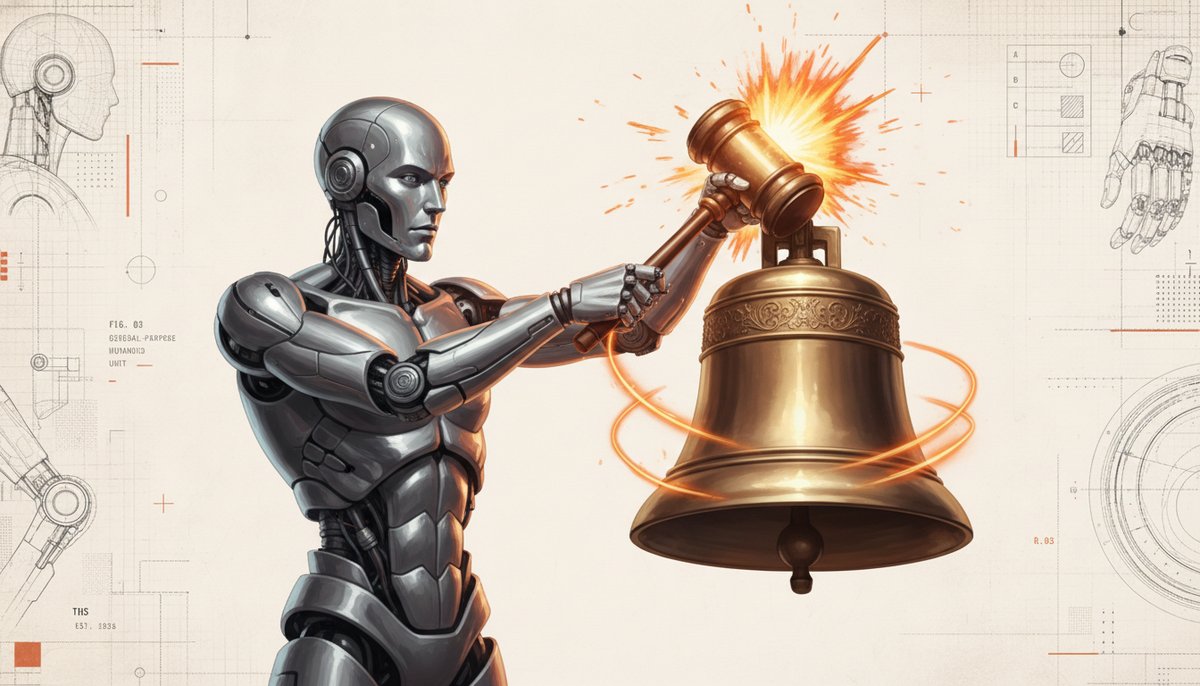
On March 20, Unitree Robotics filed for an IPO on Shanghai's STAR Market, seeking about 4.2 billion yuan ($610 million) for R&D and manufacturing capacity, with reporting pointing to a targeted valuation of up to $7 billion. The filing is a watershed for the category: Unitree, the world's top humanoid seller in 2025, is the first major humanoid maker to open its books, and the prospectus offers the clearest public view yet of what a real humanoid business actually looks like.
The numbers reframe the debate around cost, not just capability. Unitree generated roughly $248 million in revenue in 2025, and — unusually for hardware — its average humanoid selling price fell from about $85,000 in 2023 to about $25,000 in the first nine months of 2025 while companywide gross margin rose to 59.8%. That inversion, where prices collapse but margins expand, points to a genuine cost advantage rooted in self-developed actuators and vertical integration. Since actuation is 40-60% of a humanoid's bill of materials, driving that cost down faster than price is the whole game.
The filing also punctures some of the industrial hype. Humanoids became 51.5% of Unitree's core revenue in the first nine months of 2025 (up from 1.9% in 2023), and sell-through hit 95.95% — strong operating signals. But 73.6% of humanoid revenue came from research and education, another 17.4% from demonstration and display, and only 9.01% from industrial applications. The customer base is closer to institutional adoption than to the factory-automation future investors are being asked to underwrite.
For the market, Unitree's IPO is both a validation and a caution. It proves a humanoid company can be a real, profitable, scaling hardware business — a milestone the entire category has been chasing. But it also documents that even the volume leader's revenue still leans on labs and classrooms, not production lines. That gap between manufacturing maturity and proven industrial deployment is precisely the bet Western rivals like Apptronik, Figure and Boston Dynamics are racing to close with named enterprise customers.
- The Robot ReportMarch 25, 2026Unitree IPO shows a real hardware business, but the humanoid case is still early →
- CNBCMarch 20, 2026Unitree plans Shanghai IPO, testing interest in humanoid robots →
- Rest of WorldMarch 23, 2026China robot maker Unitree files for $610 million Shanghai IPO →
External links open in a new tab. TheHumanoidStore is not affiliated with any of the publications or companies cited above.