
Unitree's G1+ keeps the only sub-$20k humanoid on top — a $15,000 refresh where the hardware finally catches up.
September 14, 2026 — Unitree launched the G1+, a six-upgrade refresh of its G1 humanoid priced at $15,000 for the base model, holding the title of the only production humanoid you can buy for under $20,000 while making the machine cooler, stronger and more interactive.
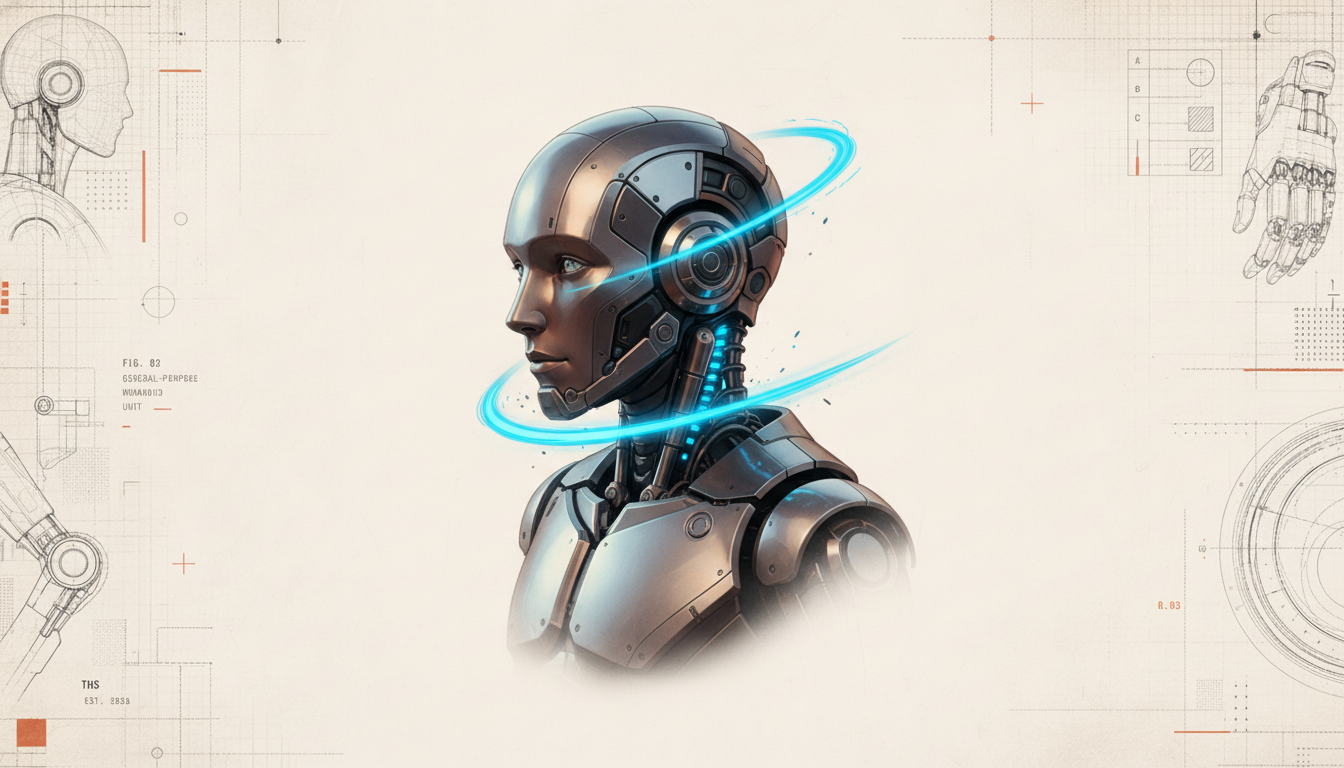
On September 14, Unitree launched the G1+, a full refresh of the G1 humanoid with six upgrades spanning motion, perception and interaction. The base G1+ lists at US $15,000 before tax and shipping, or 95,000 yuan (about $14,000) including tax in China — roughly in line with the outgoing G1, which sold direct from about $13,500 and through dealers from around $16,000. A research-focused G1+ EDU variant is priced by sales inquiry. The context is what makes this matter: the G1 is the best-selling humanoid on the planet, with Unitree shipping more than 5,500 units in 2025 against Tesla's reported 150 Optimus units, and the G1+ keeps it the only humanoid you can actually buy for under $20,000. It is a small machine — about 1.34 m tall and 35 kg — closer to child-sized than to a full adult worker.
The six upgrades are incremental but well aimed. The headline is a new two-degree-of-freedom neck that lets the robot tilt its head from -25 to +36 degrees and rotate it 110 degrees each way, so it can look around without swiveling its whole torso. The deeper engineering story is heat: Unitree overhauled the motors, lifting peak torque at the shoulder and waist by 110% while cutting the heat generated under the same load by 72%, with arm motors gaining 43% more torque at 30% less heat and thigh motors running 28% cooler. That directly targets a bottleneck that has dogged Tesla's Optimus and Boston Dynamics' Atlas in sustained operation. The G1+ also adds a dual-camera vision system plus a chest wide-angle camera, head touch sensors, a six-microphone far-field array with two waist-mounted 10W speakers, and an external-power port for long bench sessions. Runtime is unchanged at roughly two hours on a hot-swappable 9,000 mAh battery.
Buyers should be clear about what this is: a research and developer platform, not a home helper or a factory laborer. The base G1+ carries 25 degrees of freedom and about a 3 kg per-arm payload, and — importantly — ships without SDK access or secondary-development support; the EDU version steps up to 25-45 degrees of freedom with optional seven-DoF dexterous hands and a high-compute module such as an NVIDIA Jetson Orin, and is the one you buy if you intend to program it. At 1.34 m the robot cannot reach a human work envelope, which is why its real-world footprint skews to universities and labs rather than production lines. It is also the platform behind Unitree's headline stunts, from a variant climbing the 6,200-meter Chimborazo volcano to a humanoid hitting 46 km/h and jumping two meters from a standing start.
If you want to own a walking humanoid today rather than reserve one for 2027, the G1+ is the most realistic purchase on the market, and the notable thing is that Unitree improved the hardware rather than cutting the price — cooler, stronger motors mean longer real-world runs, and the neck and microphone array make it a materially better interaction and research rig at essentially the same ~$15,000. Just buy with eyes open: choose the EDU if you need to write code for it, the two-hour battery has not improved, and there is no confirmed US or UK ship date beyond general availability in China. And for American buyers the deeper catch is jurisdictional, not technical — as a Chinese-made robot the G1+ is caught by the FCC's July import ban, which is exactly why a US-built developer or industrial platform can be worth more than a lower sticker price.
- Unitree RoboticsSeptember 14, 2026G1+ Full Evolution (official product page and specifications) →
- gagadgetSeptember 14, 2026Unitree G1+: a $14,000 humanoid robot with cooler motors and a movable head →
External links open in a new tab. TheHumanoidStore is not affiliated with any of the publications or companies cited above.