
Samsung is building its own 24-hour humanoid — and the uptime race just got a vertically integrated giant.
October 20, 2026 — Samsung Electronics is running a bipedal humanoid designed for round-the-clock industrial work through three-shift testing at its Seoul R&D campus and weighing a debut at CES 2027, dropping the world's largest electronics manufacturer — motors, batteries, cameras and 100-plus factories included — into a race it openly admits it entered late.
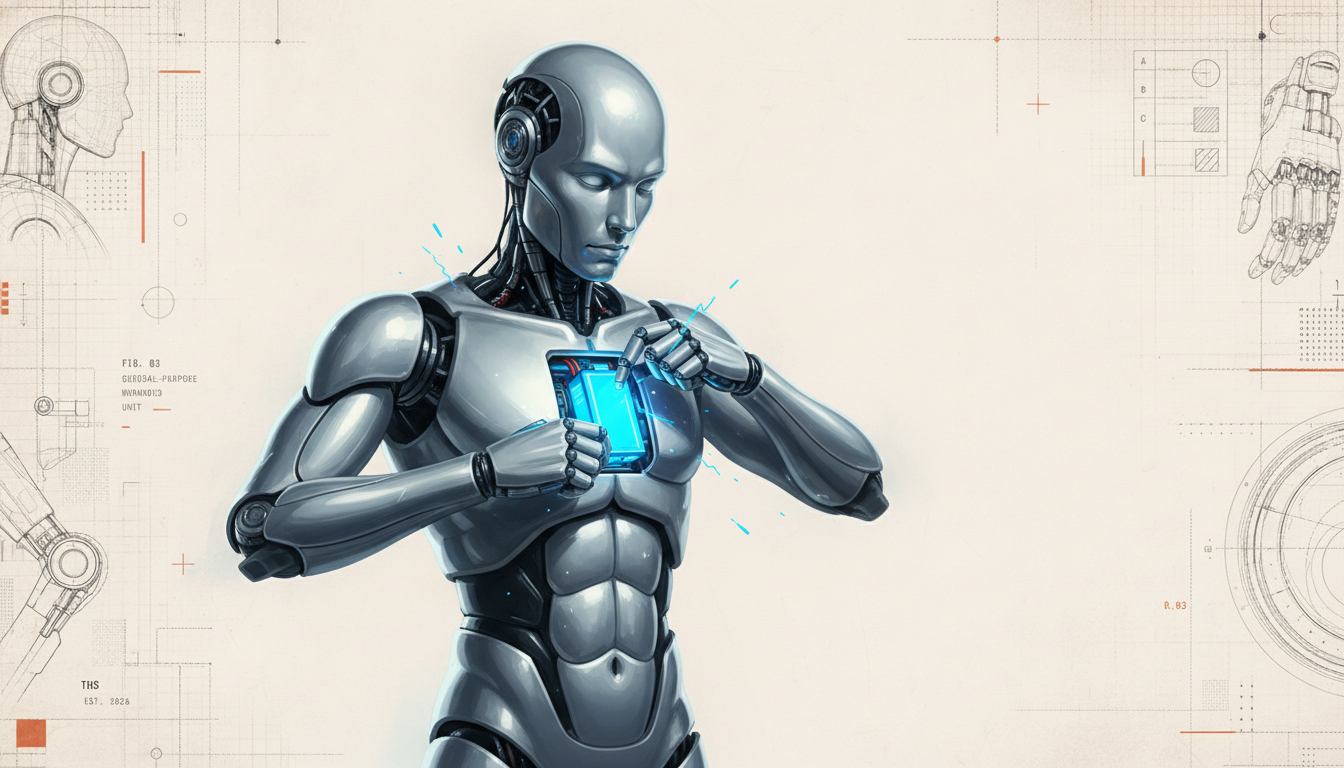
On October 20, the Korea JoongAng Daily reported, citing the JoongAng Ilbo, that Samsung's Robotics eXperience (RX) division is testing a humanoid built to run 24 hours a day in industrial settings at the company's Seoul research-and-development campus in Umyeon-dong. The machine is a bipedal robot that walks on two legs, and it is learning to navigate its surroundings and perform repetitive jobs such as transporting goods in manufacturing and logistics, with employees from Samsung and partner companies monitoring it around the clock in three shifts. Samsung is weighing several candidates, including this robot, for a possible showcase at CES 2027 in Las Vegas in January. The RX division was created in July 2026 under Device eXperience chief Roh Tae-moon to pull Samsung's scattered robotics efforts into a single unit reporting directly to him; a day after the test report surfaced, Korean media said chairman Lee Jae-yong was planning his first on-site visit to the unit — a sign of how much weight the group is putting behind the bet — to judge how ready the technology is for CES.
The spec Samsung is chasing is uptime. As humanoids move past walking-and-running demos toward real work in factories and warehouses, the ability to run reliably for long stretches without human intervention has become the benchmark that gates commercialization; the goal, Samsung's people stress, is not 24 hours on a single charge but maximizing continuous operation, most likely through hot-swap batteries that can be changed without shutting the robot down. Rivals are already close: Boston Dynamics' Atlas works about four hours before autonomously swapping its own battery in roughly three minutes, and UBTech's Walker S2 uses two batteries to auto-swap in about three minutes and touts round-the-clock operation. Samsung's blueprint is to validate 24/7 reliability at its own plants first — it runs more than 100 production lines worldwide, which double as test beds that generate operational data — then widen industrial use before moving into service and home robots for chores and caregiving. Its pitch is vertical integration: Samsung already makes the motors, batteries, cameras and chips at massive scale, and it is running a two-track strategy in which subsidiary Rainbow Robotics handles industrial field robots while the in-house RX program chases the harder general-purpose machine, with a single executive overseeing both the hardware and the AI-software teams.
Samsung is not hiding that it is behind. Kris Hauser, who leads the robotics lab inside the RX division, said at the company's AI Forum last month that Samsung 'may have started a little late' and is taking a measured approach — then put the real problem bluntly: a robot 'may be able to do a backflip but may not be able to open a water bottle cap,' meaning whole-body control is maturing while fine manipulation is not. The company is developing tendon-driven fingers that move on cables, much like human tendons, plus hand technology able to grasp and connect flexible objects such as electrical wires; at an August internal demonstration, a robot took photos with a camera and pulled a card. The demand backdrop is sobering, too: by Counterpoint Research's count, entertainment and performances plus data collection and research made up more than 60% of global humanoid shipments in the first half of 2026, with intelligent manufacturing at 13% and warehouse and logistics at just 5% — most humanoids still do no productive work, even as Goldman Sachs projects 6.5 million in annual shipments by 2035.
For a buyer, there is nothing to order, no price, and no confirmed product — Samsung would say only that it 'could not confirm' any CES plans, and its own lab chief names dexterity as unsolved. But the entry belongs on a shortlist's radar. A vertically integrated giant that already builds the motors, batteries, cameras and chips, and can dog-food robots across more than 100 of its own factories, is exactly the kind of competitor that drove down cost and drove up reliability in televisions, phones and memory — and it is explicitly aiming at the metric that actually decides deployments, uptime, rather than stage tricks. The caution is just as real: Samsung is a latecomer with no field-proven humanoid, the manipulation gap it concedes is the same wall the whole category keeps hitting, and 'prove it in our own plants first' means outside buyers are years from a purchase order. The things to watch at CES 2027 are concrete — whether a working robot rather than a concept actually appears, whether it shows sustained unattended work instead of a choreographed routine, and whether Samsung ever opens the machine to customers beyond its own lines.
- Korea JoongAng DailyOctober 20, 2026Samsung develops 24-hour humanoid robot for possible CES 2027 debut →
- BigGo FinanceOctober 21, 2026Lee Jae-yong Makes First On-Site Visit to RX Business Unit as Samsung Bets on 'Working Robots' at CES 2027 →
- Seoul Economic DailySeptember 7, 2026Samsung Aims to Unveil First Humanoid Robot at CES 2027 →
External links open in a new tab. TheHumanoidStore is not affiliated with any of the publications or companies cited above.