
LG joins the humanoid race with NVIDIA's brain — and a washing-machine plant as its proving ground.
August 13, 2026 — LG signed an MOU with NVIDIA to build its first bipedal humanoid on Isaac GR00T and Jetson Thor for a first-quarter 2027 reveal, and will put its wheeled CLOiD robot on a Tennessee washing-machine line this year to earn the data first.
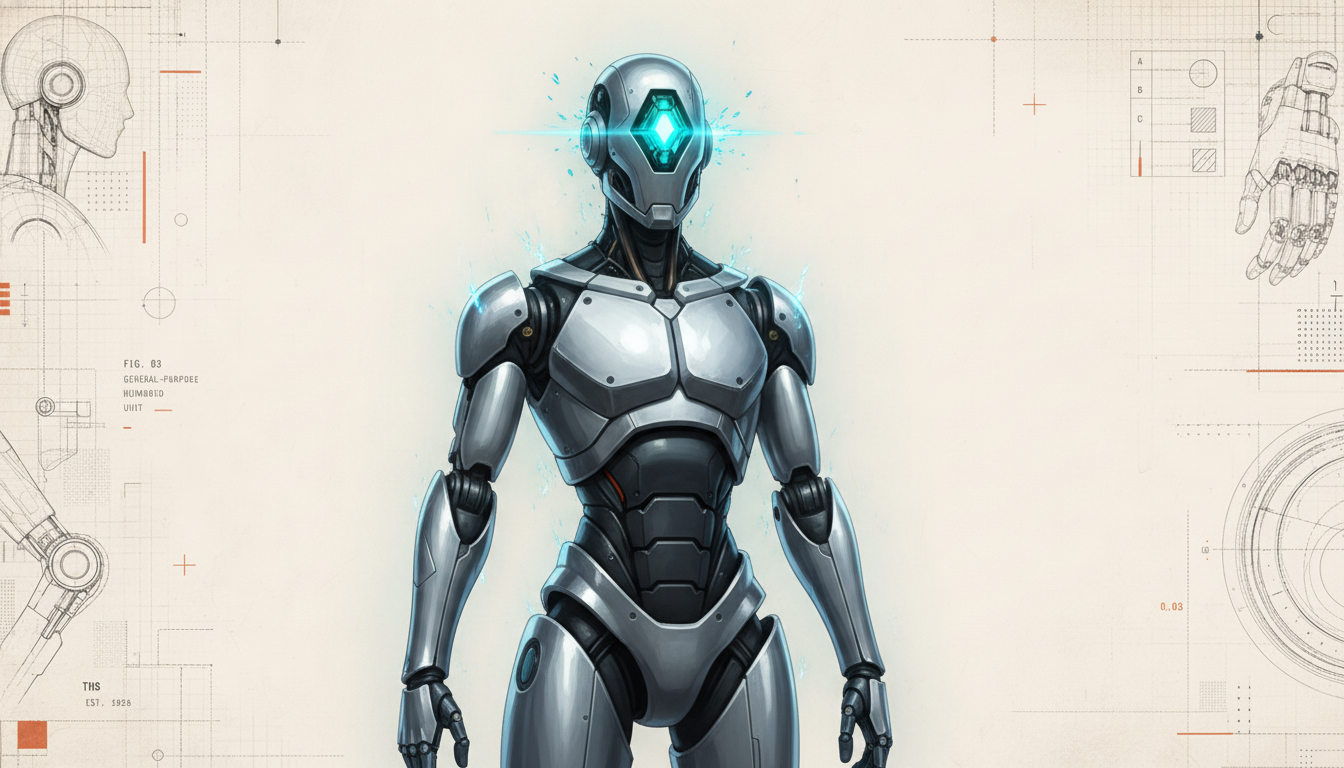
LG, the South Korean consumer-electronics giant, is entering the humanoid race, and it is doing so on NVIDIA's stack. On August 13 at NVIDIA's headquarters in Santa Clara, LG Corp chairman and CEO Kwang Mo Koo and NVIDIA CEO Jensen Huang signed a memorandum of understanding to co-develop a next-generation bipedal humanoid robot, targeting a public unveiling in the first quarter of 2027. The robot will be built on NVIDIA Isaac GR00T, NVIDIA's open humanoid foundation model, run on Jetson Thor for onboard compute, and use NVIDIA's Halos safety system. LG framed the signing — which followed a June meeting between the two CEOs in Seoul — as a shift 'from strategic blueprints into full execution' across robotics, AI factories and mobility, and Huang cast physical AI as giving 'every machine the ability to understand the real world, reason and act safely alongside people.'
The more revealing detail is that LG is not simply buying NVIDIA's brain and bolting it onto someone else's body. Under a 'One LG' approach, the group intends to supply the humanoid's own hardware: actuators from LG Electronics, sensors from LG Innotek and batteries from LG Energy Solution. LG Electronics has already set up a pilot production line for actuators — the joints and muscles of a robot — at its Changwon plant and begun initial production. The company is also building a robot data factory on LG CNS's PhysicalWorks platform and developing its own in-house Robot Foundation Model, planning to lean on Isaac GR00T while advancing its own AI. The MOU sits inside a wider bet: an AI-factory reference site on NVIDIA's Vera Rubin platform in the first half of 2027, an 80-megawatt LG AI factory in Cheonan by the first half of 2028, and a vehicle computing platform on NVIDIA DRIVE Hyperion.
Notably, LG is walking before it runs. Rather than lead with the biped, the company will first deploy its wheeled CLOiD robot — unveiled at CES 2026 — on a washing-machine production line at LG Electronics' Tennessee plant before the end of this year, to validate it in a real production environment and feed the results back into the humanoid program; hundreds of CLOiD units already run at a Seoul data factory collecting training data. A factory floor is a far harder test than a launch video, and the sequencing is honest about the difficulty gap: a wheeled robot moving materials is one problem, and a bipedal humanoid that balances, reaches, manipulates objects and makes decisions around people is another. For now, what exists publicly is a signed MOU, a signed miniature model that Koo handed Huang as a gift, and a 2027 target.
For a buyer, there is nothing to purchase yet — a first-quarter 2027 reveal is a target, not a ship date, and this year's pattern is that humanoid reveal dates slip. But the announcement matters for procurement in two ways. First, it deepens the consolidation around NVIDIA's stack: LG joins Boston Dynamics, Agility, Apptronik, NEURA, Mentee and 1X in building on Isaac GR00T and Jetson, which means the humanoid 'brain' is increasingly a shared chip-and-foundation-model layer across brands — a trend that should, over time, ease integration and second-sourcing for customers. Second, LG's 'wheeled robot in a real plant first, biped later' sequence is the template buyers should reward: judge any humanoid vendor by dated, in-facility validation, and by whether it controls its own actuators, sensors and batteries — the parts that ultimately decide cost, uptime and repairability — rather than by the reveal reel. And because the CLOiD pilot lands on US soil, it is a rare deployment worth tracking as the FCC's ban on new foreign-made robots reshapes where humanoids can legally be sold.
- LG Corp. (PR Newswire)August 13, 2026LG to Unveil Its Next-Gen Humanoid Robot, Built on NVIDIA Isaac GR00T →
- The Korea HeraldAugust 14, 2026LG humanoid set for 2027 debut with Nvidia AI brain →
- Robotics & Automation NewsAugust 14, 2026LG to unveil new Nvidia-powered humanoid robot in early 2027 →
External links open in a new tab. TheHumanoidStore is not affiliated with any of the publications or companies cited above.