
Avatar Robotics raises $6.5M betting that humanoids should keep a human in the loop — for now.
August 5, 2026 — San Francisco's Avatar Robotics raised a $6.5 million seed to scale warehouse humanoids that pair remote human operators with AI, claiming 900,000 products already packed and shipped in customer facilities.
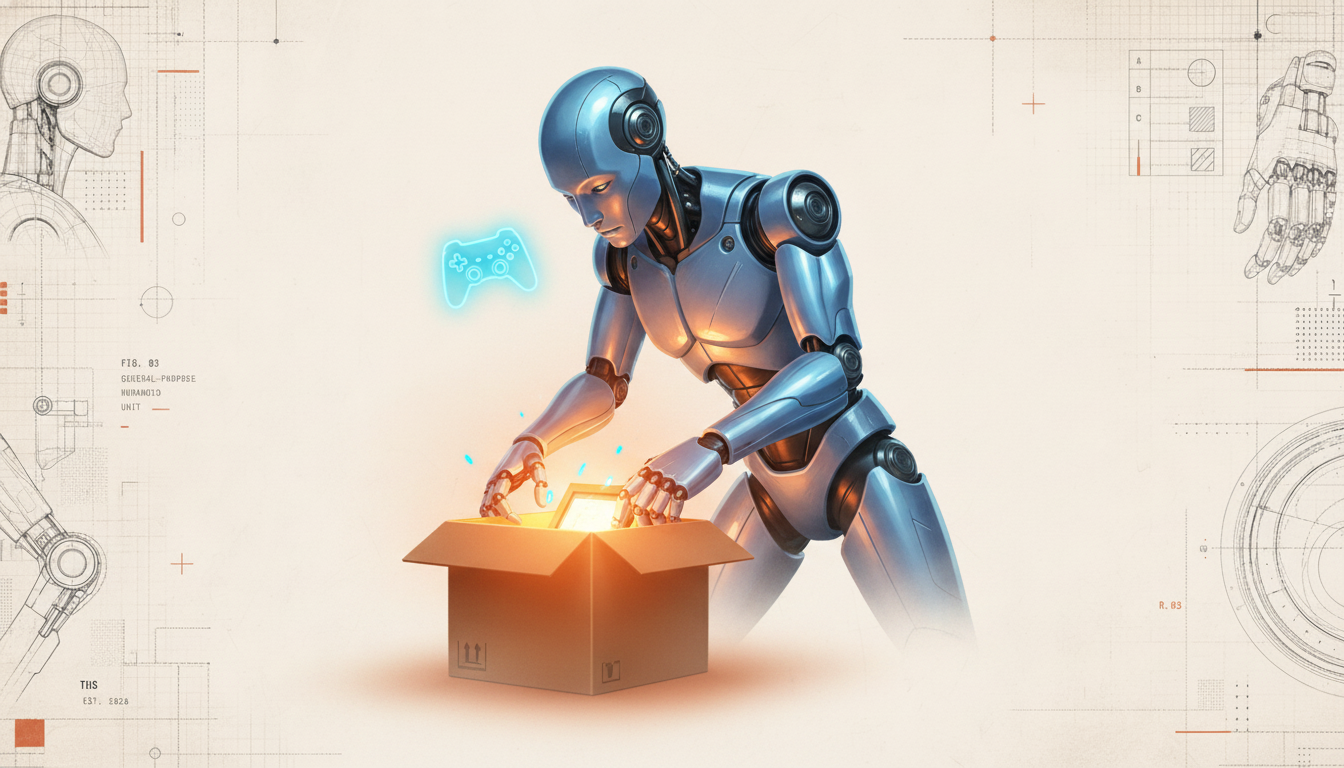
Avatar Robotics, a San Francisco startup that launched in December 2025, announced a $6.5 million seed round on August 5 led by AlleyCorp, with defy.vc having led an earlier pre-seed and Headline, Henry Ford III, Refashiond and others participating. The company builds humanoid robots for industrial work — picking, packing, sorting, kitting, inventory counting and moving materials — aimed at warehouses and factories that struggle to hire and keep workers for repetitive or physically demanding jobs. Its headline claim is a deployment one: Avatar says its robots have helped pack, sort and ship more than 900,000 products in customer facilities since December, including work for a large, unnamed global beauty retailer, and that it has begun expanding beyond a pilot with a multibillion-dollar warehouse operator.
The distinguishing bet is that Avatar keeps a human in the loop on purpose. Rather than promising full autonomy on day one, its system lets remote operators drive the robots when needed, so customers can run them in active facilities immediately while every completed task feeds data back to improve the AI. The stated long-term goal is to have a single employee oversee a fleet of robots instead of continuously piloting one. Founder and CEO Colin Webb frames it as 'a new kind of workforce' for a U.S. labor shortage — scalable industrial labor that also lets people operate machines remotely 'from safer and more comfortable environments.' It is a pragmatic model, and an honest one: it books real, paid deployments today precisely by conceding that hands-off autonomy is not there yet.
The caveats are the size of the round and the nature of the number. At $6.5 million, this is a seed — an order of magnitude below the nine-figure rounds that define the category's leaders, from Figure and Apptronik to Agility and Europe's Neura — so Avatar is buying runway, not scale. And the 900,000-products figure is a throughput claim, not an autonomy claim: with operators in the loop, it proves the robots do real warehouse work, not that they do it unattended. Avatar declined to disclose how many robots it runs, the value of its contracts, or what its service costs. The team is credible — alumni of Cruise, Apple, Tesla, Intuitive Surgical and Unity, plus MIT-trained researchers — but the model's economics hinge on operator cost falling as autonomy rises, which is the same unproven bet across the teleoperation-first field.
For a warehouse or manufacturing buyer, Avatar is worth a look precisely because it is candid about the human-in-the-loop: you can put units into a live facility now and get measured pick, pack and sort work without waiting for full autonomy. But the questions to press are the ones the funding announcement does not answer — what the service costs per unit or per hour, how many robots one operator can actually run today, and the autonomous success rate on your own SKUs with no operator intervention. Avatar also fits the week's larger pattern: with the FCC's new ban shutting new Chinese humanoids out of the U.S., American makers — from giants like Figure and Agility down to seed-stage entrants like this one — just got a more sheltered runway to prove they can turn deployments into economics.
- AI InsiderAugust 5, 2026Avatar Robotics Raises $6.5M in Seed Funding to Develop Industrial Humanoid Robots →
- Avatar Robotics / PR NewswireAugust 5, 2026Avatar Robotics Raises $6.5 Million Seed to Build the Unlimited Industrial Workforce →
- StockTitanAugust 5, 2026Avatar Robotics Raises $6.5M Seed Funding →
External links open in a new tab. TheHumanoidStore is not affiliated with any of the publications or companies cited above.